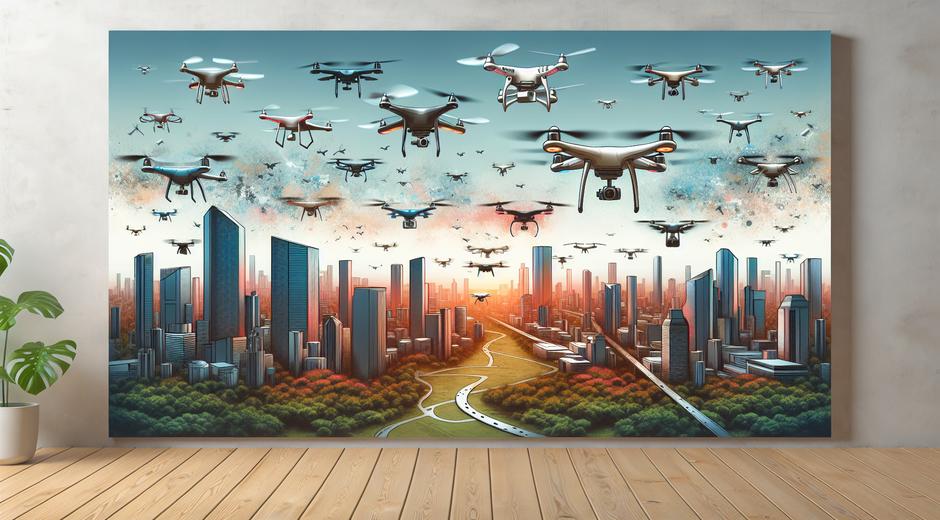


Autonomous Drones Explained A Complete Guide for Tech Enthusiasts
Autonomous drones are changing how we imagine air based technology They move beyond remote control to intelligent flight that senses adapts and makes decisions on their own This article explores what autonomous drones are how they work top applications key benefits and the challenges companies and hobbyists face While we focus on technical detail we also look at real world use cases and tips for anyone who wants to understand or adopt this technology
What Are Autonomous Drones
An autonomous drone is an unmanned aerial vehicle that can perform missions with minimal human input These systems rely on onboard sensors machine learning and mission planning software to navigate detect obstacles and complete tasks without a pilot directing every move Unlike basic drones that require constant manual control autonomous drones can follow a planned route adapt to dynamic conditions and return to base when needed
Core Technologies Behind Autonomous Drones
Several technology building blocks enable autonomy in aerial systems
1 Computer Vision and Sensors Computer vision cameras lidars and radars feed data to the flight computer allowing the drone to map its surroundings recognize objects and avoid collisions
2 Navigation and Positioning GPS inertial measurement units and sensor fusion help the drone determine its location and maintain stable flight even in complex environments
3 Machine Learning and Decision Engines Neural networks and rule based systems process sensor input to make navigation and task decisions These algorithms improve over time with more data and testing
4 Communication and Fleet Management Secure radio or cellular links allow remote monitoring mission updates and cooperative behavior when multiple drones work together
Key Applications of Autonomous Drones
Autonomous drones are moving into many sectors because they combine mobility with intelligence Here are high impact applications
Precision Agriculture Farmers use autonomous drones for crop monitoring pest detection and targeted spraying These systems collect high resolution imagery and deliver analytics that boost yield while reducing resource use
Infrastructure Inspection Drones inspect bridges towers and pipelines safely and efficiently They can detect defects early which reduces maintenance cost and downtime
Logistics and Delivery Autonomous drones offer new models for fast last mile delivery especially in areas with limited road access Companies pilot routes that deliver medical supplies or small parcels with predictable timing
Emergency Response and Search Autonomous drones support rescue teams by scanning wide areas in real time They carry thermal sensors and can operate in hazardous conditions to find survivors or assess damage
Environmental Monitoring For conservation and research autonomous drones collect data on wildlife habitats water quality and land use These aerial surveys produce consistent data with less disturbance to natural sites and partner organizations often publish findings Learn more about how conservation groups use tech by visiting BioNatureVista.com which highlights real world projects that combine nature and innovation
Benefits for Businesses and Communities
Autonomous drones deliver measurable benefits across industries Reduced risk is a primary advantage because drones can do tasks that would be dangerous for people They also increase efficiency by automating repetitive inspections and data collection which frees staff for complex analysis
Cost savings appear in several ways For instance routine inspections that once required costly human deployment can be completed by drones on a predictable schedule Data driven decision making improves outcomes and reduces waste which matters in agriculture construction and utilities
Finally autonomous drones enable new services such as rapid response delivery and continuous environmental monitoring that were not feasible at scale before They create business opportunities for startups and improve public services in remote regions
Technical Challenges and Safety Considerations
Despite rapid progress autonomous drones face technical and regulatory hurdles
1 Robustness to Weather Bad weather conditions make sensing and control more difficult Systems must handle wind rain and low visibility to be safe for many missions
2 Reliable Perception Machine learning models can fail in unexpected scenarios Ensuring reliable perception across diverse environments remains a research and engineering priority
3 Airspace Integration As drone traffic increases authorities require systems that share airspace with manned aircraft This demands precise tracking and communication standards
4 Privacy and Ethics Cameras and sensors raise privacy concerns Operators must adopt transparent data policies and comply with local regulations
Regulatory Landscape and Compliance
Regulators around the world are crafting rules to balance innovation with safety Many regions require specified certifications for autonomous operations night time flights and operations beyond visual line of sight Companies must obtain approvals demonstrate system reliability and sometimes operate under special flight corridors
Staying current with legal requirements is essential for deployment Whether you are a startup or part of a large enterprise building a compliance roadmap will reduce delays and demonstrate commitment to safe operations For a broad tech resource and industry perspective see expert content on techtazz.com which covers emerging trends in robotics and autonomous systems
Practical Tips for Teams Building Autonomous Drone Projects
If you are planning to prototype or scale an autonomous drone solution follow these practical steps
1 Start with a Clear Use Case Define the mission performance metrics and acceptable risk levels Decide whether you need full autonomy or augmented autonomy with operator oversight
2 Invest in Simulation Testing Before flying in real environments develop a virtual testbed for rapid iteration Simulation reduces cost and improves safety during early development
3 Adopt Modular Architecture Build software in modular layers for perception planning and control This makes it easier to update algorithms independently
4 Prioritize Data Management Flight logs sensor data and model training datasets are valuable assets Establish secure pipelines for collection annotation and continuous learning
5 Engage with Regulators Early Early engagement reduces friction and helps design systems that meet airspace and privacy rules
The Future of Autonomous Drones
Trends indicate autonomous drones will continue to mature as compute power sensors and algorithms improve Edge computing and more efficient batteries will extend mission duration while 5G and beyond will enable denser operations and real time coordination
We can expect to see more collaborative fleets performing complex tasks like coordinated mapping precision spraying and package distribution in urban environments As standards for safety and communication evolve one can anticipate smoother integration into civil airspace and urban logistics systems
Conclusion
Autonomous drones represent a pivotal technology that blends robotics perception and cloud analytics to unlock new capabilities for business and society They are already improving safety and efficiency across many sectors and will expand into new domains as technology and policy align Whether you are a developer engineer investor or curious reader understanding autonomous drones will help you spot opportunities and make informed decisions As you explore next steps keep learning and tap reliable industry sources for updates and best practices