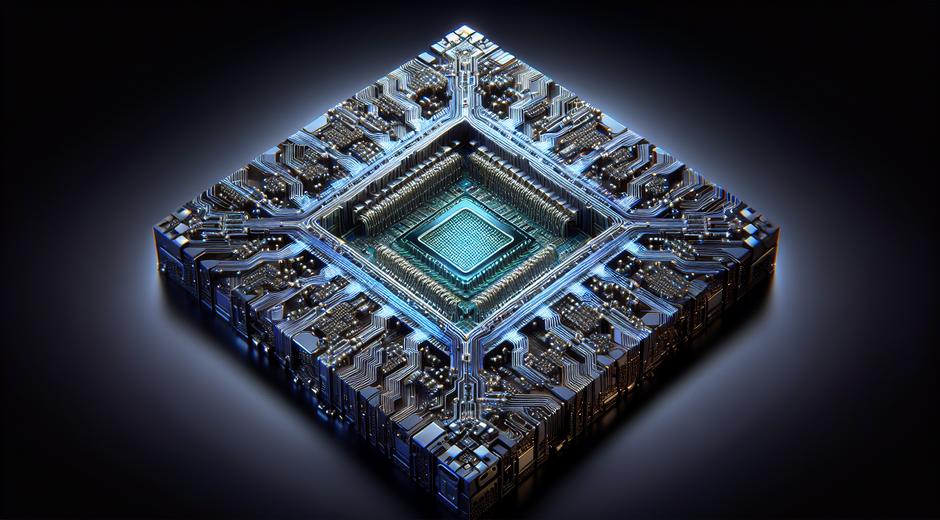


Quantum Processors Explained: How They Work and Why They Matter
Quantum processors are reshaping our view of what computing can do. Unlike classical processors that use bits with values zero or one quantum processors use quantum bits or qubits that can represent superposed states. This property opens a new space of algorithms and applications that can tackle certain problems far more efficiently than classical approaches. In this article we explore how quantum processors work the core technologies that enable them the major challenges and the applications that will benefit most. If you want a hub for tech news and deep dives visit techtazz.com for more articles and guides about quantum computing and related topics.
What are quantum processors
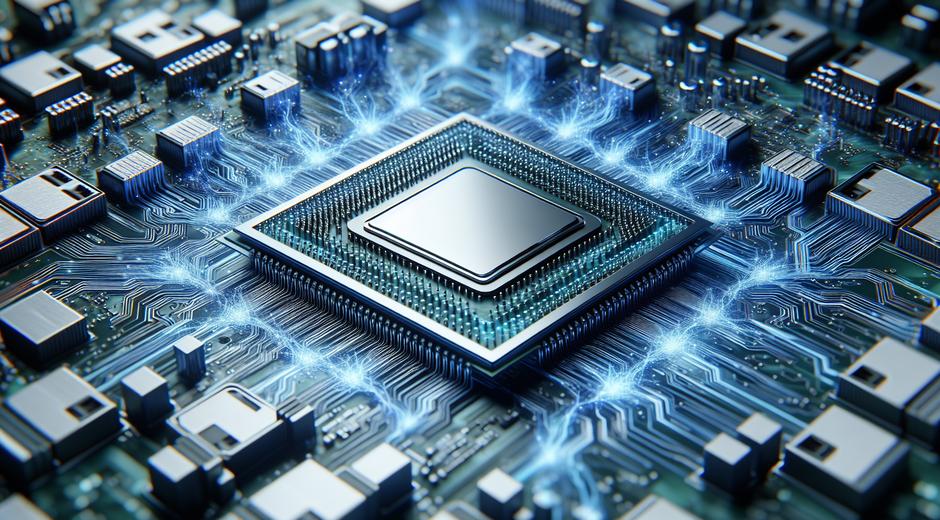
A quantum processor is the physical device that executes operations on qubits. Qubits can be realized in many physical systems such as superconducting circuits trapped ions photons and spin systems. A quantum processor combines qubit control readout error mitigation and various layers of firmware and software that translate abstract quantum algorithms into hardware level pulses and measurements. The promise of quantum processors lies in their ability to explore a computational space that grows exponentially with the number of qubits. For carefully chosen problems this growth can lead to dramatic speed ups compared to classical processors.
How quantum processors differ from classical processors
Classical processors perform logical operations using transistors that switch on or off to represent zero or one. Quantum processors operate with qubits that can be in superposition and that can become entangled. Entanglement links the state of one qubit to another in ways that have no analogue in classical physics. Quantum gates manipulate superposed amplitudes and measurement collapses these amplitudes into classical outcomes. The result is a fundamentally different programming model that requires new compilers new error management techniques and new ways to reason about performance.
Core technologies behind quantum processors
Several physical platforms compete to deliver scalable quantum processors. Superconducting circuits create qubits from Josephson junctions and are controlled by microwave pulses. Trapped ions use electromagnetic fields to trap and manipulate ion qubits with laser pulses. Photonic approaches encode qubits in light which is attractive for communication. Spin based systems use electron or nuclear spins in semiconductors. Each platform has trade offs in coherence time gate fidelity and ease of scaling. Researchers also build dedicated control electronics cryogenic infrastructure and pulse shaping software that are all essential parts of a quantum processor.
Quantum software stack and programming
Quantum processors require a layered software stack that maps high level algorithms to low level controls. At the top level programmers write quantum circuits or quantum programs using domain specific languages. These programs pass through compilers that optimize gate sequences and manage resource allocation for qubits. Near the hardware level firmware generates control pulses and timing signals while error mitigation routines run to reduce the impact of noise. Quantum simulation tools help developers test code on classical machines before running on real processors. The entire pipeline is an active area of research and industry development aimed at improving throughput and developer productivity.
Key challenges and how industry tackles them
There are several major challenges to making quantum processors practical. Qubit noise and decoherence lead to errors that grow with circuit depth. Scaling up qubit count while maintaining high fidelity is difficult because control complexity grows quickly. Thermal management is another concern for platforms that require cryogenic operation. To address these issues researchers pursue multiple strategies. Error correction and error mitigation methods reduce the effective error rate. Hardware engineering focuses on improving material quality and device design to extend coherence times. System level approaches aim to co design hardware and software so that both evolve together for better performance. Close collaborations between academia startups and large tech companies are accelerating progress.
Performance metrics for quantum processors
Evaluating quantum processors requires different metrics than the ones used for classical chips. Gate fidelity measures how accurately a physical gate implements its intended operation. Coherence time quantifies how long a qubit maintains quantum information. Quantum volume is a holistic metric that combines qubit count fidelity connectivity and circuit depth to provide a single performance indicator. Other benchmarks test specific algorithmic performance such as for chemistry or optimization tasks. As the field matures benchmarking will become more standardized allowing clearer comparisons across platforms and vendors.
Applications that will benefit most
Certain application domains are poised to benefit early from quantum processors. Quantum chemistry and materials science can leverage quantum processors to simulate molecular systems more naturally than classical methods. Optimization problems in logistics finance and machine learning may see advantages for specially tailored algorithms. Quantum algorithms for sampling and linear algebra open possibilities for speed ups in data analysis. While universal fault tolerant quantum processors remain a longer term goal near term devices will be useful for hybrid quantum classical workflows that offload specific subroutines to a quantum processor.
Ecosystem and practical steps to get involved
For industry professionals students and researchers there are clear ways to engage with quantum processors now. Cloud access to real quantum processors has democratized experimentation. Many providers offer tutorial material and developer toolkits so you can run experiments and learn low level controls and higher level algorithm design. Communities and workshops help accelerate learning and foster collaboration. If you plan to attend conferences and meetups you might also need travel arrangements and planning resources. For travel planning and bookings a simple tool to use is TripBeyondTravel.com which can help you find travel options for events and conferences where you can learn about quantum processors in person.
The road ahead for quantum processors
The evolution of quantum processors will be iterative and diverse. Expect advances in device quality control and new error management techniques. Co design of algorithms hardware and software will push practical performance forward. In time these devices may unlock solutions to problems that are beyond reach for classical systems. For businesses it is wise to monitor progress identify use cases that match foreseeable capabilities and invest in skills and collaborations that allow early adoption. Quantum processors will not replace classical processors for general tasks but will provide a complementary capability for a new class of problems.
Conclusion
Quantum processors represent a frontier of computing hardware that combines exotic physics with deep engineering and software innovation. Understanding their strengths and limitations is crucial for organizations that want to explore potential business value. The landscape is rich with opportunity and the pace of development means that staying informed and building relevant skills now will pay dividends later. For ongoing coverage of quantum processors and related technology topics check the resources available at our site and plan your next conference trip using the travel planning link above to get hands on experience with the latest devices.