AI-Powered Productivity Suites: Transforming Workflows and Collaboration This Year
Introduction: The Rise of AI-Powered Productivity Suites
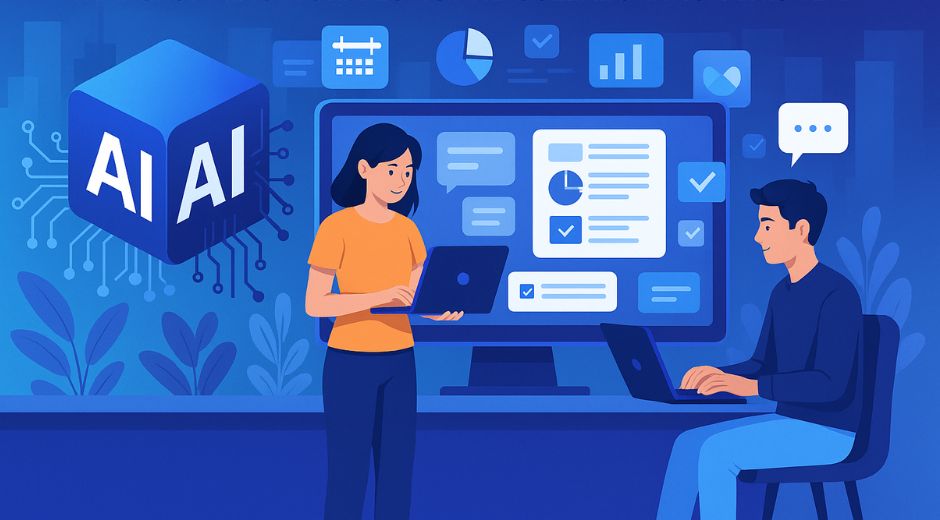
In today’s fast-paced digital economy, businesses and professionals are under constant pressure to achieve more in less time. Enter AI-Powered Productivity Suites — a new generation of software applications designed to automate repetitive tasks, optimize workflows, and enhance team collaboration. These platforms combine traditional productivity tools like word processors, spreadsheets, and project management systems with advanced artificial intelligence capabilities.
By integrating AI, productivity suites now offer features such as automated scheduling, intelligent data analysis, natural language processing, and real-time collaboration insights. Organizations that adopt these tools gain a competitive edge by improving efficiency, reducing errors, and freeing employees to focus on strategic, creative, or high-value work.
Core Features of AI-Powered Productivity Suites
AI-Powered Productivity Suites typically include a suite of interconnected applications, each enhanced with AI functionality:
Smart Email Management – AI algorithms prioritize incoming emails, suggest responses, and detect patterns for faster communication.
Automated Scheduling – Tools can find optimal meeting times across multiple calendars, avoiding conflicts and minimizing manual coordination.
Intelligent Document Creation – AI assists in drafting, editing, and summarizing documents, making content creation faster and more accurate.
Task Automation – Repetitive workflows, such as data entry or report generation, can be automated with minimal human intervention.
Collaboration Insights – AI analyzes team interactions and workflow patterns, suggesting process improvements to boost productivity.
Companies like Techtazz.com are documenting the rapid adoption of these suites, highlighting case studies of organizations achieving measurable gains in efficiency and employee satisfaction.
Benefits of AI-Powered Productivity Suites
The advantages of adopting these tools are wide-ranging:
Time Savings: Automating repetitive tasks allows employees to dedicate more time to strategic work.
Enhanced Collaboration: Integrated AI helps teams communicate effectively, track progress, and maintain accountability.
Improved Accuracy: Machine learning models reduce human error in calculations, reports, and data analysis.
Scalable Operations: Organizations can handle larger volumes of work without increasing headcount.
Data-Driven Decisions: AI analyzes trends and generates insights, supporting informed decision-making.
Practical Applications Across Industries
AI-Powered Productivity Suites are transforming industries in unique ways:
Finance: Automating reporting, reconciling accounts, and generating predictive financial insights.
Marketing: Crafting personalized campaigns, analyzing engagement data, and optimizing strategies.
Healthcare: Streamlining patient record management, scheduling, and clinical documentation.
Education: Assisting teachers with grading, lesson planning, and personalized student feedback.
Travel & Tourism: Agencies can optimize itineraries, handle customer queries, and generate personalized travel recommendations, as seen on TripBeyondTravel.com.
Challenges and Considerations
Despite their benefits, AI-Powered Productivity Suites also pose challenges:
Data Privacy: Sensitive company and customer data must be protected, requiring robust encryption and compliance with regulations.
User Adoption: Employees may resist change or find AI tools overwhelming without proper training.
Integration Complexity: Aligning AI suites with existing software infrastructure can require significant planning.
Cost: Enterprise-grade AI suites can be expensive, although ROI often justifies the investment.
Future Trends in AI Productivity
The evolution of AI-Powered Productivity Suites is ongoing. Key trends include:
Natural Language Interfaces: Conversational AI that allows users to interact with software using voice or text commands.
Hyper-Personalization: Tailoring workflows, dashboards, and insights to individual work styles and preferences.
Predictive Analytics: Anticipating project bottlenecks, resource allocation, and potential risks.
Cross-Platform Collaboration: Seamless integration across devices, locations, and applications, as highlighted by techchurch.com.
AI Ethics and Governance: Ensuring algorithms are fair, transparent, and aligned with organizational values.
Conclusion
AI-Powered Productivity Suites are transforming the way organizations operate, enabling smarter workflows, faster decision-making, and more efficient collaboration. As AI continues to evolve, these tools will become increasingly indispensable in modern workplaces.
Embracing AI-powered productivity is no longer optional—it’s essential for organizations aiming to remain competitive in a rapidly evolving digital landscape.
Innovate Empower Elevate

Model Compression Techniques That Preserve Accuracy

Edge Inference Is Bringing AI Closer to Devices

Why Compute Efficiency Is the New Performance Metric

How AI Orchestration Improves Complex Systems

Inference Acceleration and the Future of AI Performance